
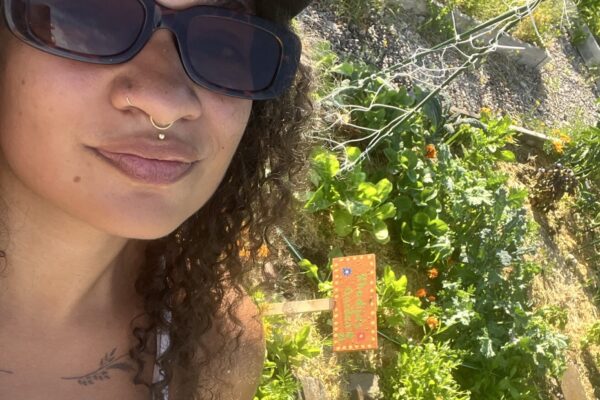

As a Black woman, I recently learned that gardening is more than something I enjoy – it is part of a tradition deeply rooted in my history and a practice deeply engrained in my DNA.
In 2025, after a long and disheartening legislative session, I got an email notifying me that I secured a coveted community garden plot through Garden City Harvest, a Missoula non-profit aimed at convening community through gardening and expanding access to locally grown food. Gardening has given me so much. It has challenged my internalized perfectionism through many inevitable failures, taught me to fall in love with the process rather than the outcome, and reminded me to make time for the things that bring me joy.
As a Black woman, I recently learned that gardening is more than something I enjoy – it is part of a tradition deeply rooted in my history and a practice deeply engrained in my DNA. Gardening has been a long held resistance and reclamation practice since the time of enslavement to now.
Enslaved Africans brought ancestral knowledge of agriculture to the United States through the Trans-Atlantic slave trade. This knowledge was used as a means of survival and cultural preservation. Drawing on traditional agricultural knowledge and cultivation practices, enslaved folks supplemented the meager rations given to them by their enslavers by also growing their own food. Enslaved people tended to these gardens at night after long days of doing the work of their enslavers. What we think of as "traditional Southern foods” like collards, black eyed peas, sweet potatoes, and watermelon, were all crops grown by Black folks as a means of survival through nourishment that have also morphed into a cultural identity. Since the time of enslavement, gardens have been a symbol of not only survival but Black resilience, autonomy, and cultural expression.
With the end of slavery, many Black folks continued to create community garden spaces not only to establish self-sufficient food systems, but also to establish community spaces for social gatherings, cultural exchange, and political organizing. Black garden spaces were paramount to creating Black political power before and during the civil rights movement. Poet Anne Spencer’s garden served as a gathering space for leaders like Langston Hughes, Zora Neale Hurston, and Martin Luther King. During the civil rights movement, Black community gardens were essential spaces in getting Black folks registered to vote. These gardens became more than places to grow food.
Today, Black community gardening spaces are still sites of nourishment, community care, and organizing. Black community garden spaces are acts of resistance in Black neighborhoods that too often reside in food deserts and communities that have experienced decades of disinvestment and inequitable access to fresh, healthy food.
Cultivation as a Black gardening practice goes way beyond just growing plants. Black gardeners of the past and today cultivate love, community care, liberation and resistance. It is incredibly special to me that every time I plant a seed, meticulously pull weeds, lose sleep about how to best tend to my garden plot, or make a dish with vegetables from my garden to share with friends, I’m connecting with and honoring my ancestors who have not only passed down the knowledge of growing your own food, but the knowledge of how to show up and fight for our community.
I carry those lessons into my work at ACLU of Montana and feel grateful to continue that tradition.
This Juneteenth, I am excited to celebrate Black culture across the spectrum and feel especially connected to the practice of gardening while Black. If you’d like to learn more about the history of Black gardening, check out these resources below (included in the comments) or if you want to join a community garden yourself, here are some community garden programs across the state.
Missoula: Community Gardens — Garden City Harvest
Helena: The Gardens — Helena Community Gardens
Bozeman: Community Gardens | City Of Bozeman
Butte: Seed Library ~ Butte Public Library (406) 792-1080
Billings: Amend Park Community Garden | City of Billings, MT - Official Website