Montana’s Ballot Interference Prevention Act is unconstitutional.
The American Civil Liberties Union, ACLU of Montana, and Native American Rights Fund today challenged a Montana law that severely restricts Native Americans’ access to the ballot.
The lawsuit was brought on behalf of Western Native Voice and Montana Native Vote, Native American led organizations focused on getting out the vote and increasing civic participation in the Native American community; and the Assiniboine & Sioux Tribes of Fort Peck, Blackfeet Nation, Confederated Salish and Kootenai Tribes of the Flathead Reservation, Crow Tribe, and Fort Belknap Indian Community. They are challenging the so-called Montana Ballot Interference Prevention Act (BIPA).
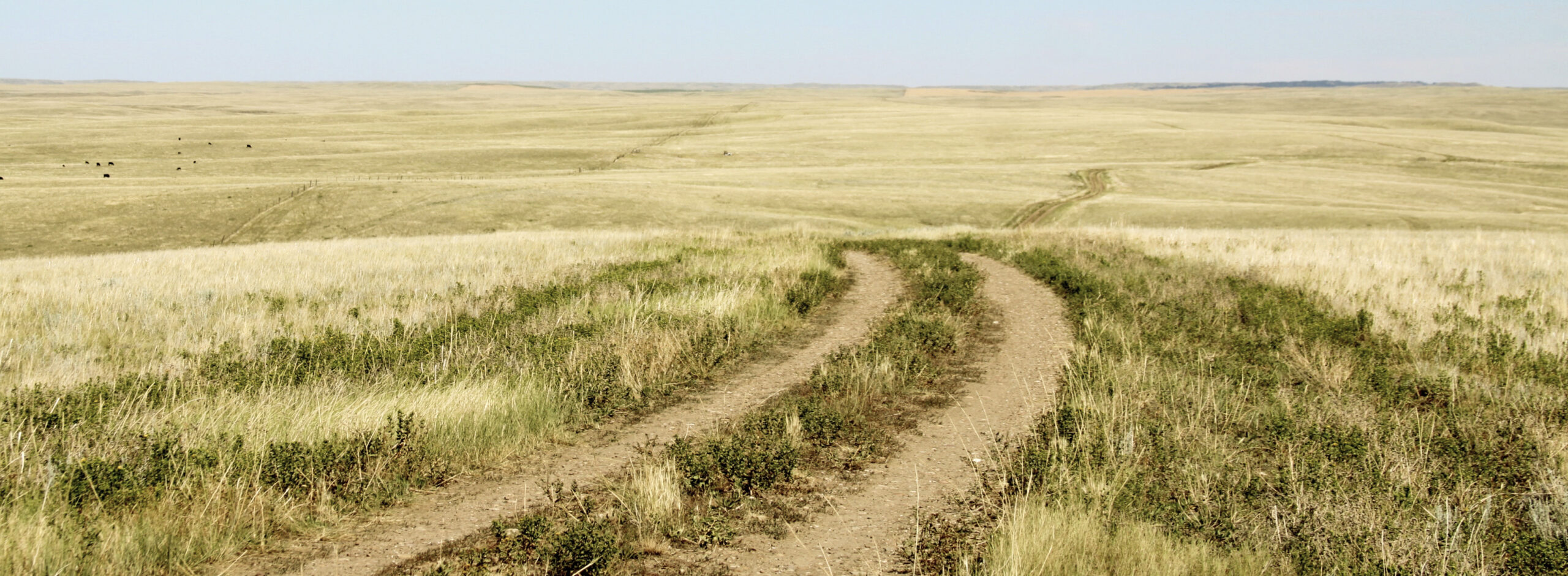
Voting has never been easy for Indigenous people living on rural reservations, which are often geographically isolated with limited access to postal service and transportation.
“This misguided and harmful law is leading to the disenfranchisement of entire communities,” said Lillian Alvernaz, Indigenous justice legal fellow at the ACLU of Montana. “This law is an attack on the constitutional rights of Indigenous people living on rural reservations.”
The majority of Montanans cast their ballots by mail. Approximately 70,000 people live on the seven reservations in Montana. Rural tribal communities work with get-out-the-vote organizers who collect and transport ballots to election offices that would otherwise be inaccessible. These ballot collection efforts are often the only way many Indigenous people can access the vote. BIPA effectively ends this practice, disenfranchising Indigenous voters en masse. For example:
- BIPA imposes severe restrictions on who can collect ballots and how many ballots can be collected. Get-out-the-vote organizers would previously collect 85 ballots each on average, but are now restricted to just six ballots per collector.
- Under BIPA, bringing ballots to the post office for relatives or neighbors could result in a $500 fine per ballot.
- Compliance with BIPA is complicated by unclear definitions about who exactly can collect a ballot. Organizers may or may not fit into its provisions, depending on which interpretation law enforcement officials adopt.
- BIPA’s provisions are incompatible with Indigenous family structures and relationships. BIPA defines a “family member” as “an individual who is related to the voter by blood, marriage, adoption, or legal guardianship.” But that definition does not reflect other family relationships in tribal communities, where family includes members of the extended community.
“BIPA ignores the everyday realities that face Native American communities. It is not reasonable to expect voters to drive an hour to drop off their ballot, so collecting ballots in reservation communities just makes sense. Criminalizing this behavior is unfair to Native American voters and does nothing to solve the real problem of mail not being picked up and delivered to Native homes,” said Jacqueline De León of the Native American Rights Fund.
Western Native Voice and Montana Native Vote work to promote civic participation in the Native American community. On average, they collect over 85 ballots per organizer, which has been critical in ensuring people on reservations can exercise their fundamental right to vote. Under BIPA, however, Western Native Voice and Montana Native Vote would be able to assist a mere fraction of the voters it served in 2018.
“A main tenet of our organization’s principles is to encourage civic engagement,” said Marci McLean, executive director of Western Native Voice. “We developed a robust get-out-the-vote program and coupled it with an official ballot collection program. We have organizers on every reservation in the state, and in urban areas. For Native voters living on a reservation, this law directly harms our ability to participate in our democracy.”
State Senator Albert Olszewski introduced the legislation in 2017 that later passed through Legislative Referendum in 2018 and became BIPA. After listening to testimony on the bill regarding its impact on Indigenous voters, Senator Olszewski still did not believe that BIPA would hinder the ability to vote. However, according to numerous elections administrators and voting rights advocates, that is exactly what BIPA does.
The complaint charges BIPA with violating the voting and due process rights of individuals living on reservations, as well as the free speech and association rights of Western Native Voice and Montana Native Vote as they engage in ballot collection on reservations.
"We are urging the court to immediately block this law that would disenfranchise thousands of eligible voters who live on rural reservations,” said Alora Thomas-Lundborg, senior staff attorney with the ACLU’s Voting Rights Project. “This case is about making sure every eligible voter who wants to vote can actually do so.”
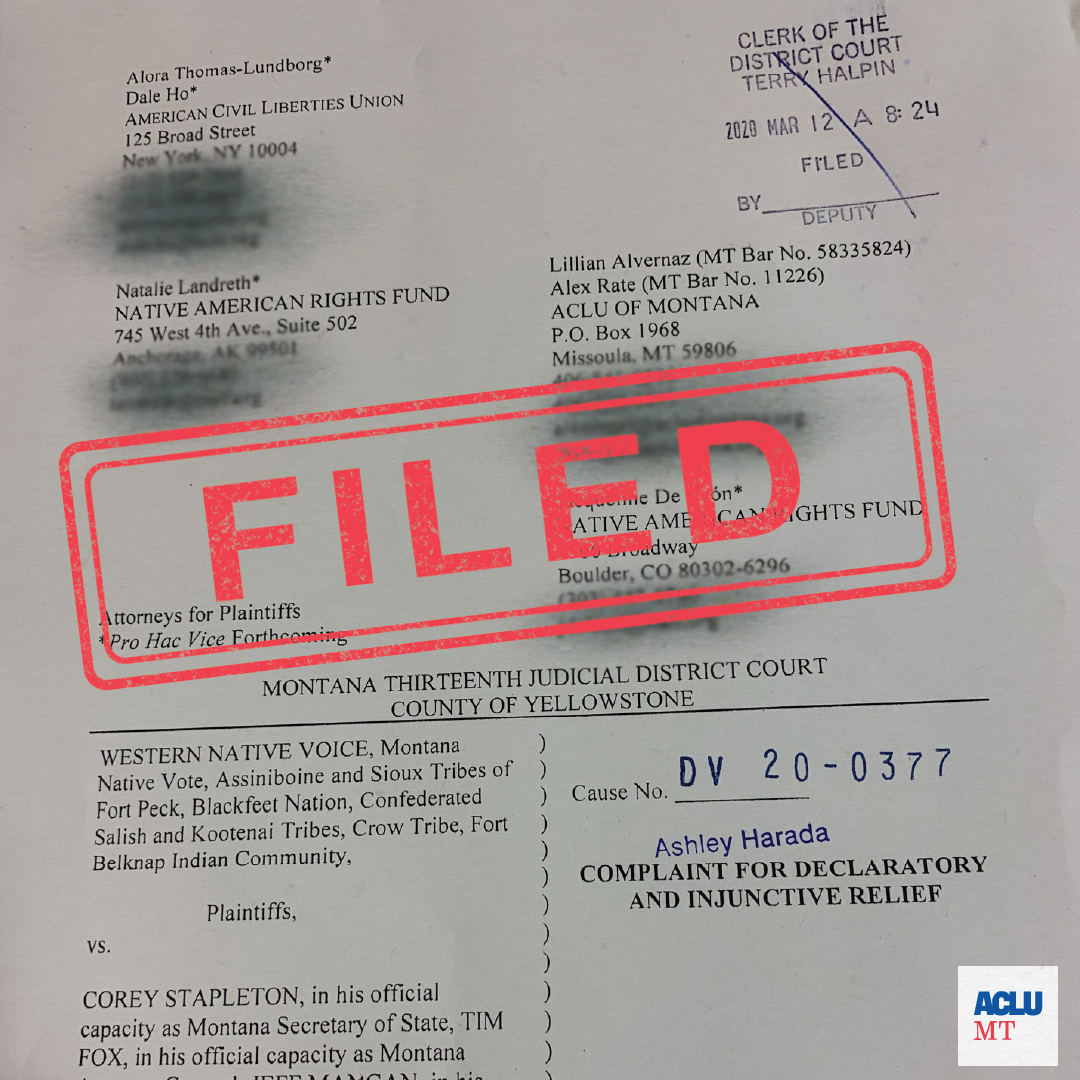
The lawsuit, Western Native Voice v. Stapleton, was filed in the Montana Thirteenth Judicial District Court in Yellowstone County.