News & Commentary
Hitting the halfway point with gratitude!
Friday, March 7, marked the halfway point of the Montana legislative session, called "transmittal."

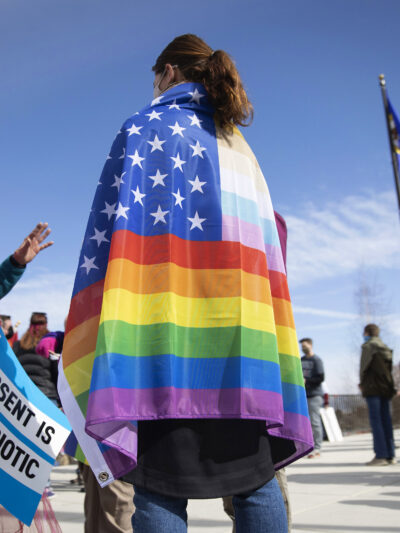
ACLU Condemns Baseless Censure of State Rep. Zooey Zephyr
ACLU of Montana roundly condemned a vote by the Montana House of Representatives baselessly prolonging the de facto censure of Montana State Representative Zooey Zephyr (HD-100) and denying her constituents adequate representation in state government.
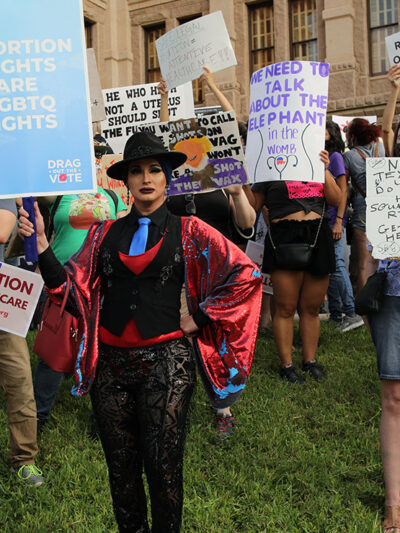
Gendered Dress Codes Hurt Everyone — Especially Non-Binary People Like Me
The Washington State Human Rights Commission’s found Alaska Airlines’ gendered dress code policy discriminatory. It’s time for the airline to do the right thing.

The Roe Draft Signals a Potential New Front in the Already-Raging War Against the LGBTQ Community
This isn’t a “they’re coming for us next” moment. They’ve already come for us, and the fight of our lives is here.
Over 150 Montana Business Leaders Ask Montana Lawmakers To Oppose Bills that Would Harm Transgender Youth
More than 150 business leaders from across Montana have signed onto a letter that will be sent to members of the House Judiciary Committee asking lawmakers to oppose anti-trans legislation, HB 112 and HB 113. Both bills were introduced by Rep. John Fuller (R-Kalispell).
Gender Identity Is Protected by the Montana Human Rights Act
An Administrative Law Judge with the Montana Department of Labor and Industry today found that Yellowstone County unlawfully discriminated against a transgender woman during her time as an employee with Yellowstone County. According to the ruling, gender identity is protected by the Montana Human Rights Act. Building on the U.S. Supreme Court’s recent ruling in Stephens v. Harris Funeral Home, the Court found health care plans cannot categorically exclude coverage for gender affirming care, meaning that an employer may not deny medically necessary health care to employees solely because of their transgender status.
ACLU of Montana's Top Ten of 2018!
Thanks to your support, we did a lot in 2018! Here are some highlights from the past year.
Reasons Why I-183 is Unconstitutional
We have eight reasons why I-183 would be unconstitutional.
I-183 would require government officials at the state and local level to prevent Montanans from using bathrooms and other public facilities based on a medically inaccurate and subjective assessment of a person’s gender. This violates Montanans’ fundamental rights to privacy and dignity.The measure prevents transgender and non-binary Montanans from having equal access to public facilities because of their gender identity.The initiative subjects all Montanans to scrutiny of their gender expression, and invades their privacy and individual dignity. Any Montanan could be stopped by government officials and private individuals if another person does not think they satisfy stereotypes of what it means to be ‘masculine’ or ‘feminine.’The initiative would force transgender and non-binary Montanans out of public life and prevent them from pursuing life’s basic necessities – in this case, using the bathroom in a public building.The measure forces the government to interfere with an individual’s right to make private decisions about which public facilities they should use.Because I-183 defines sex as “a person’s immutable biological sex as objectively determined by anatomy and genetics existing at the time of birth,” state and local governments would be forced to access private medical information to determine what facility an individual should use.The measure would gut nondiscrimination laws put in place by cities throughout Montana, including Butte, Bozeman, Missoula, Helena, and Whitefish.I-183 is vague and unenforceable. Montanans and local governments charged with enforcing I-183 have no guidance on how to comply with I-183’s requirements and as a result would be exposed to costly lawsuits. The “bounty” provision of I-183 empowers vigilantes to sue local governments when they believe an individual is not using the facility that corresponds with the sex assigned on an original birth certificate.
ACLU of Montana Statement on November, 2017 Special Session
Montana’s budget crisis offered state legislators the opportunity to set aside politics and create budget solutions for Montana. Unfortunately, at a time when the needs of vulnerable Montanans should have created consensus, our elected officials targeted the transgender community for discrimination and kowtowed to the for-profit prison industry.

Stay Informed
Sign up to be the first to hear about how to take action.
By completing this form, I agree to receive occasional emails per the terms of the ACLU’s privacy statement.
By completing this form, I agree to receive occasional emails per the terms of the ACLU’s privacy statement.