News & Commentary
Montana Must Evolve Beyond Juvenile Life Without Parole
Steven Keefe was only 17 when he was sentenced to life in prison without the possibility of parole. At the time of his sentencing, he was too young to vote, buy cigarettes, or join the military. Yet, under our broken criminal justice system he was old enough to be put into prison for the rest of his life.

Gathering of Oceti Sakowin: Environmental Symposium
On October 11 and October 12, Indigenous nations will gather for a two-day environmental symposium. This gathering is the first of its kind on Fort Peck. Water protectors, activists, environmentalists, and concerned tribal members will come together for two days of learning and discussion about protecting the environment, the people, and the sacred lands on which Fort Peck is located. After the violent and excessive response from government agencies to peaceful protestors at Standing Rock, the ACLU filed federal and state open records requests to learn if the government has any plans to obstruct the free speech rights of Indigenous protestors to the Keystone XL Pipeline. At the symposium, the ACLU will present a Know Your Rights workshop and lead a discussion about legal observing.

The Supreme Court Considers Mandatory Government Funding of Religious Education
In Espinoza v Montana Department of Revenue, the Supreme Court will address a question that would have been unthinkable to ask even until quite recently: Can a state be forced to underwrite religious education with taxpayer dollars? Although the court has previously allowed the government to adopt school-voucher programs that provide indirect government aid to religious schools, it has never suggested that the U.S. Constitution somehow requires them to do so — and certainly not in the face of state constitutional rules barring taxpayer funding of religious education. Yet that is essentially what the petitioners are seeking in Espinoza, the latest in a disturbing line of cases attacking the very foundations of the separation of church and state.At issue in Espinoza is a voucher-type program in Montana designed to divert millions in government dollars to private schools, the overwhelming majority of which are religiously affiliated. The program, enacted in 2015, allows taxpayers to receive dollar-for-dollar tax credits for donations to Student Scholarship Organizations, which then award scholarships to students attending private elementary and secondary schools. In other words, if a taxpayer owes the state, say, $100 in taxes, she can decide instead to send that money directly to an SSO, which will then spend it on private-school scholarships. In practice, the tax-credit program has served its unmistakable goal of funneling government dollars to religious education: The only SSO operating in the state supports 13 private schools, 12 of which are religiously affiliated, and over 94 percent of program scholarships have gone to finance religious education.

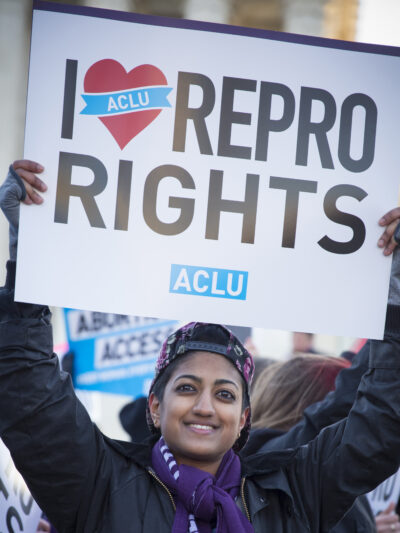
ACLU of MT: Nobody Should be Forced to Justify Their Personal Medical Decisions to the Government
This week, Montana Attorney General Tim Fox joined 18 other states in support of the unconstitutional and dangerous law in North Carolina that bans abortions after 20 weeks. In response to the brief AG Fox signed, the following statement is by Caitlin Borgmann, ACLU of Montana's Executive Director. "Efforts to ban constitutionally protected abortions are out of touch and could create real harms for people who need access to the full spectrum of reproductive healthcare. It’s embarrassing to see Montana sign on to the multi-state brief in support of North Carolina’s backwards-looking and short-sighted law. The government has no place between doctors and their patients, and nobody should have to justify their personal medical decisions to the government. Attorney General Tim Fox has shown how out of step he is with Montanans by signing on to this brief."
Lawsuit Challenging Inhumane Treatment of Mentally Ill Prisoners Back at District Court
A case challenging the unconstitutional treatment of individuals with mental illness at the Montana State Prison can now move forward, after the United States Court of Appeals for the Ninth Circuit reversed a lower court decision that had dismissed the case. In its opinion issued today, the Ninth Circuit held that the case describes “horrific treatment of prisoners.”

It's the Law: Native Students Have the Right to Wear Traditional Regalia at Graduation
The ACLU of Montana, Western Native Voice, and the Native American Rights Fund sent a letter to the Principal of Polson High School to provide some background on the law that ensures that Native students are not prohibited from wearing traditional regalia at graduation. The letter requested that the school adjusts its policy in a way that unequivocally allows Native American students to wear traditional regalia at graduation without any prior restraint or approval.

U.S. Supreme Court Ruling Affirms Tribal Rights
Today, the US Supreme Court ruled in favor of Clayvin Herrera, affirming that the Crow Tribe’s hunting rights under the 1868 Treaty of Fort Laramie remain valid.
Governor Bullock Signs HB 217 into Law
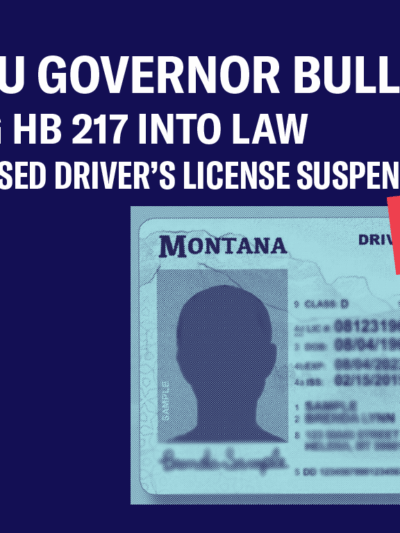
Tuesday afternoon, Governor Bullock signed a bill that will end the harmful practice of suspending driver’s licenses of people who are unable to pay court debt.
Montana Supreme Court Blocks Anti-Abortion Law
In a win for Montanans, the state’s Supreme Court upheld a lower court decision on Friday April 26, blocking a law designed to restrict abortion access in the state. The law at issue prevents advanced practice registered nurses (APRNs) from providing abortion care on threat of criminal prosecution. As a result of the court’s ruling, the law remains blocked for plaintiff Helen Weems, a certified nurse practitioner, and allows her to continue providing abortion care to her Montana patients. The Center for Reproductive Rights and the American Civil Liberties Union of Montana filed the lawsuitlast year.

Stay Informed
Sign up to be the first to hear about how to take action.
By completing this form, I agree to receive occasional emails per the terms of the ACLU’s privacy statement.
By completing this form, I agree to receive occasional emails per the terms of the ACLU’s privacy statement.