
News & Commentary
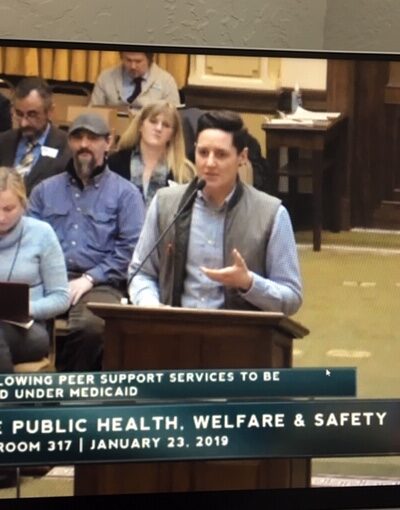
ACLU of Montana Statement on Medicaid Reimbursal for Peer Support Services (SB 30)
“Peer support programs are a vital and unique way to support people who are recovering from substance use disorders or other behavioral health issues. When people have access to peers, their outcomes improve. People in peer support programs have fewer symptoms and end up in the hospital less often. Their well-being and self-esteem improve, and they participate more in their communities. Their recoveries are also more thorough and longer-lasting.
Montana Legislation Would End Debt-Based Driver’s License Suspensions in the State
Under current Montana law, the Montana Department of Justice, Motor Vehicle Division, is required to suspend the driver’s license of any person who fails to pay court debt. Every year, the state suspends the driver’s licenses of more than 10,000 low-income people who cannot afford to pay court debt, even when the reason for their debt has nothing to do with public safety when driving. In Montana, driving with a suspended license carries a penalty of between 2 days and 6 months of jail in addition to more fines and an extended period of suspension. H.B. 217 would relieve thousands of Montanans from this harmful practice.
ACLU of Montana Statement on Renewal of Medicaid Expansion
“Renewing Montana’s Medicaid program is a win-win. It will continue to provide access to healthcare for our most vulnerable, save the state money, and increase economic activity and jobs. Renewing our Medicaid program will also make Montana safer and help Montanans who are returning to their communities after being incarcerated. Any proposal to add a work requirement or drug testing would harm all of the people who depend on Medicaid to access healthcare and would be a huge waste of Montana’s tax dollars. Nobody would benefit from the bureaucratic mess that these barriers would create.” SK Rossi, Advocacy and Policy Director for the ACLU of Montana

Bill to End Debt-based Driver’s License Suspensions Has Widespread Support
Lawmakers, advocacy groups agree: suspending driver’s licenses for unpaid court debt improperly punishes individuals and is counterproductive.
Herrera v. Wyoming: What You Need to Know
The U.S. Supreme Court will hear oral arguments for Herrera v. Wyoming on Jan. 8, 2019. In taking this case, the Supreme Court has a chance to hold the federal government accountable for a promise that it made to the Crow Tribe 150 years ago. That promise, ratified in the 1868 Treaty of Fort Laramie, guarantees the right of the Crow to hunt and fish on all “unoccupied lands” of the United States. The ACLU of Montana supports tribal sovereignty and signed onto an amicus brief in support of Clayvin Herrera and the Crow Tribe.
ACLU of Montana’s Top Ten of 2018!
Thanks to your support, we did a lot in 2018! Here are some highlights from the past year.
Secretary of State Stapleton and County Elections Officials Must Ensure Free and Fair Elections in 2020
The ACLU of Montana has asked Secretary of State Corey Stapleton to take proactive steps to ensure that every qualified voter has access to the ballot box in 2020.

Plaintiff Spotlight: The Pryor Four Continue Fight Against Racism
In January 2017, after traveling nearly 90 miles to cheer on their children, Brandy and Elsworth GoesAhead, Whitney Holds, and Emerine Whiteplume — known as the Pryor Four — were denied entrance to the Reed Point gymnasium by Athletic Director Teresa Bare. Waiting outside the school in cold winter weather, the Pryor Four knocked on the door seeking entrance. Ms. Bare opened the door for another individual and announced, “we don’t have any workers yet, so we are only letting white people in.” Read more about their lawsuit.


Stay Informed
Sign up to be the first to hear about how to take action.
By completing this form, I agree to receive occasional emails per the terms of the ACLU’s privacy statement.
By completing this form, I agree to receive occasional emails per the terms of the ACLU’s privacy statement.