
News & Commentary
Incarcerated People and Their Families Living in Fear During COVID-19 Pandemic
I’ve worked with the ACLU of Montana for nearly 11 years, and have read heart-wrenching intake complaints from across state for years. But, what I’m reading from incarcerated people and their families in response to COVID-19 is about as heart-wrenching and unjust as I have ever seen.
Correctional Facilities Must Be Transparent in their Response to Possible COVID-19 Outbreak in Montana’s Prisons and Jails
The ACLU of Montana sent right-to-know requests to the Department of Corrections, the Governor’s Office, and the Board of Pardons and Parole, along with Gallatin County Pre-Release Center, Lewis and Clark County Jail, and Butte County Jail. These public records requests seek information regarding testing and preventive measures undertaken by state and local agencies to address the COVID-19 pandemic.

Statement on Governor Bullock's Recently Released Directive
Governor's directive on COVID-19 and the criminal legal system is too late, and far too little.
Disability Rights Montana Lawsuit Seeks Immediate Reduction of Incarcerated Individuals to Protect Public Health
Disability Rights Montana today filed an emergency petition asking the Montana Supreme Court to take immediate action to benefit prisoners with disabilities by reducing the number of people who are now in or who will enter Montana’s jails and prisons. The ACLU of Montana, together with the Beck, Amsden and Stalpes law firm filed the petition on behalf of Disability Rights Montana.
The ACLU of Montana Offers Support to State Officials to Safeguard People in the Criminal Justice System from COVID-19
The ACLU of Montana contacted Governor Bullock and Montana Department of Corrections Director Michael last week urging them to develop plans to protect some of Montana’s most vulnerable population from COVID-19 – the people in our prisons and jails, and those involved in the criminal justice system. Today, the organization, along with partner organizations, urged the Governor, Director Michael, and representatives from every part of the criminal legal system to prioritize releasing people who are vulnerable and, as much as possible, end new incarcerations, revocations from supervision, and other activities that make social distancing impossible. Read the letter.
New ACLU of Montana Report: Exclusionary Discipline in Montana’s Schools Pushes Students Out at Alarming Rates
Indigenous students face highest disparities in out-of-school suspensions and arrests.According to a new ACLU of Montana report, students in Montana lost more than 18,000 days of school during the 2015-2016 school year because of out-of-school suspensions. During the same school year, students were referred to law enforcement agencies from school or a school-related function 1,121 times and were arrested at school or a school-related function 326 times. Students of all ages – including elementary school children – were suspended, referred to law enforcement, and arrested. “Education is a civil right, and all students must be given equitable opportunities to learn,” said Caitlin Borgmann, ACLU of Montana Executive Director. “The data is extremely troubling and shows too many students in Montana being denied this fundamental right.” Indigenous students faced the highest disparities: they lost nearly six times the rate of instruction and were arrested more than six times as often as their white peers. The ten schools with the highest rate of days lost because of suspensions were located either on a reservation or in a town bordering a reservation. Indigenous students in urban areas also experienced disparities in days lost. Indigenous female students had the highest school-related arrest rates among all students -- they were arrested at 12 times the rate of white female students. Public schools on reservations were more likely to have a law enforcement officer (LEO) at school. Montana’s use of exclusionary discipline and police in schools is especially harmful to Indigenous students because of the legacy of colonization, historical trauma, and overincarceration of Indigenous people.“Indigenous students bear the brunt of Montana’s failure to provide an education to all students,” Borgmann said. “Montana has failed to adequately address the harms of its colonialist legacy. Indigenous people in Montana remain disproportionately impoverished and imprisoned. Denying Indigenous students their right to an education only serves to perpetuate this unconscionable legacy.”Students of color and students with disabilities also experienced disparities in days lost, referrals, and arrests. Black students were referred to law enforcement at a higher rate than any other race and lost nearly three times as many days of instruction as white students. Latinx students lost 1.5 times the rate of days as white students. Students with disabilities lost twice the rate of instruction and were arrested twice as often as students without disabilities. Other main findings of the report include:

Montana Must Evolve Beyond Juvenile Life Without Parole
Steven Keefe was only 17 when he was sentenced to life in prison without the possibility of parole. At the time of his sentencing, he was too young to vote, buy cigarettes, or join the military. Yet, under our broken criminal justice system he was old enough to be put into prison for the rest of his life.
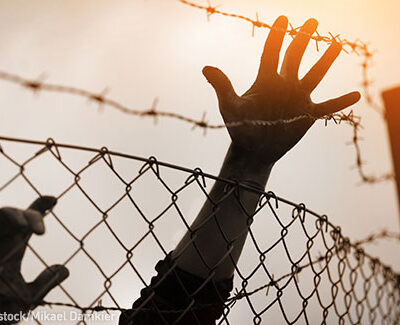
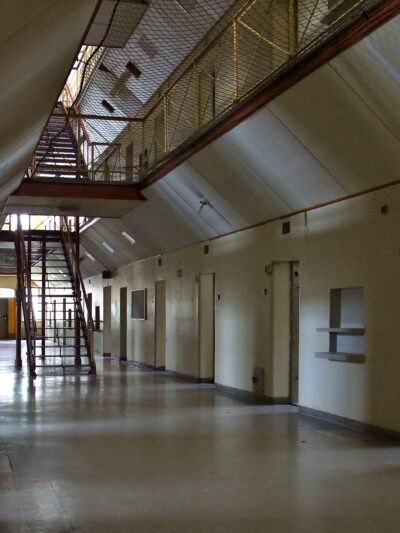
Lawsuit Challenging Inhumane Treatment of Mentally Ill Prisoners Back at District Court
A case challenging the unconstitutional treatment of individuals with mental illness at the Montana State Prison can now move forward, after the United States Court of Appeals for the Ninth Circuit reversed a lower court decision that had dismissed the case. In its opinion issued today, the Ninth Circuit held that the case describes “horrific treatment of prisoners.”
Stay Informed
Sign up to be the first to hear about how to take action.
By completing this form, I agree to receive occasional emails per the terms of the ACLU’s privacy statement.
By completing this form, I agree to receive occasional emails per the terms of the ACLU’s privacy statement.