News & Commentary
New Keystone XL Lawsuit: Montana’s Response to Anticipated Protests in Question
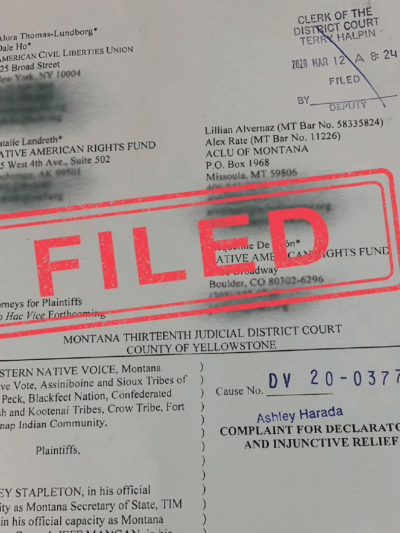
Montana agencies are withholding public documents possible about Keystone XL pipeline protest preparations.Today, the ACLU of Montana, Western Environmental Law Center, and the Bahr Law Offices challenged two Montana state agencies’ refusal to release public records relating to the Keystone XL Pipeline. The documents in question pertain to the government’s plans in response to protests. The ACLU is concerned that such plans may include spying on protesters, suppressing constitutionally protected free speech rights, and responding with militarized police tactics.
New ACLU of Montana Report: Exclusionary Discipline in Montana’s Schools Pushes Students Out at Alarming Rates
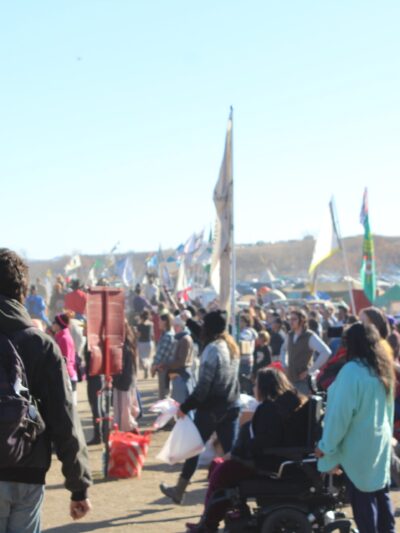
Indigenous students face highest disparities in out-of-school suspensions and arrests.According to a new ACLU of Montana report, students in Montana lost more than 18,000 days of school during the 2015-2016 school year because of out-of-school suspensions. During the same school year, students were referred to law enforcement agencies from school or a school-related function 1,121 times and were arrested at school or a school-related function 326 times. Students of all ages – including elementary school children – were suspended, referred to law enforcement, and arrested. “Education is a civil right, and all students must be given equitable opportunities to learn,” said Caitlin Borgmann, ACLU of Montana Executive Director. “The data is extremely troubling and shows too many students in Montana being denied this fundamental right.” Indigenous students faced the highest disparities: they lost nearly six times the rate of instruction and were arrested more than six times as often as their white peers. The ten schools with the highest rate of days lost because of suspensions were located either on a reservation or in a town bordering a reservation. Indigenous students in urban areas also experienced disparities in days lost. Indigenous female students had the highest school-related arrest rates among all students -- they were arrested at 12 times the rate of white female students. Public schools on reservations were more likely to have a law enforcement officer (LEO) at school. Montana’s use of exclusionary discipline and police in schools is especially harmful to Indigenous students because of the legacy of colonization, historical trauma, and overincarceration of Indigenous people.“Indigenous students bear the brunt of Montana’s failure to provide an education to all students,” Borgmann said. “Montana has failed to adequately address the harms of its colonialist legacy. Indigenous people in Montana remain disproportionately impoverished and imprisoned. Denying Indigenous students their right to an education only serves to perpetuate this unconscionable legacy.”Students of color and students with disabilities also experienced disparities in days lost, referrals, and arrests. Black students were referred to law enforcement at a higher rate than any other race and lost nearly three times as many days of instruction as white students. Latinx students lost 1.5 times the rate of days as white students. Students with disabilities lost twice the rate of instruction and were arrested twice as often as students without disabilities. Other main findings of the report include:

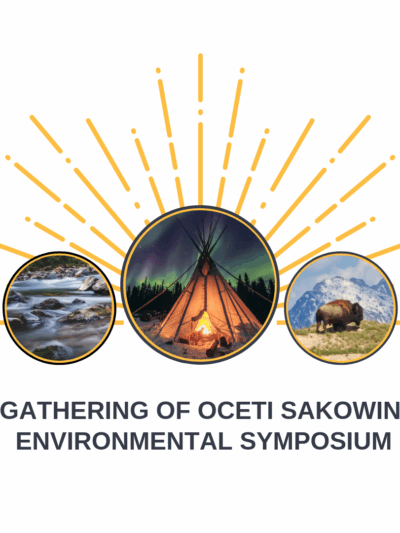
Gathering of Oceti Sakowin: Environmental Symposium
On October 11 and October 12, Indigenous nations will gather for a two-day environmental symposium. This gathering is the first of its kind on Fort Peck. Water protectors, activists, environmentalists, and concerned tribal members will come together for two days of learning and discussion about protecting the environment, the people, and the sacred lands on which Fort Peck is located. After the violent and excessive response from government agencies to peaceful protestors at Standing Rock, the ACLU filed federal and state open records requests to learn if the government has any plans to obstruct the free speech rights of Indigenous protestors to the Keystone XL Pipeline. At the symposium, the ACLU will present a Know Your Rights workshop and lead a discussion about legal observing.
It's the Law: Native Students Have the Right to Wear Traditional Regalia at Graduation
The ACLU of Montana, Western Native Voice, and the Native American Rights Fund sent a letter to the Principal of Polson High School to provide some background on the law that ensures that Native students are not prohibited from wearing traditional regalia at graduation. The letter requested that the school adjusts its policy in a way that unequivocally allows Native American students to wear traditional regalia at graduation without any prior restraint or approval.
U.S. Supreme Court Ruling Affirms Tribal Rights
Today, the US Supreme Court ruled in favor of Clayvin Herrera, affirming that the Crow Tribe’s hunting rights under the 1868 Treaty of Fort Laramie remain valid.
Indigenous Justice Program Featured on National Podcast "At Liberty"
At Liberty sits down with Meg Singer, the Indigenous Justice Program Manager here at the ACLU of Montana, and Lillian Alvernaz, the ACLU's first Indigenous Justice Legal Fellow, to discuss Indigenous justice and organizing for social change in Indigenous communities. To learn more about Meg and Lillian, and our Indigenous justice work go here.

U.S. Department of Education Launches Investigation into Discrimination Against Native Students in Wolf Point
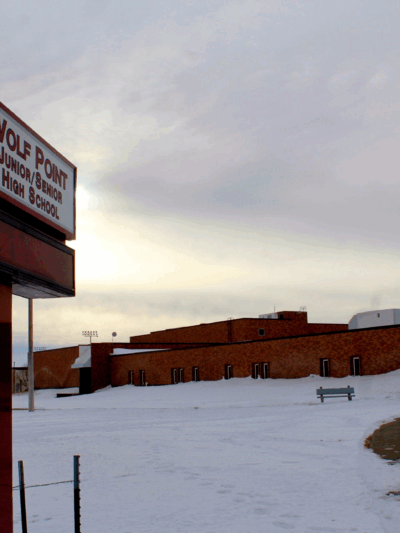
This week, investigators with the United States Department of Education’s Office of Civil Rights (OCR) are visiting with students and parents in Wolf Point to learn about their experiences with discrimination in the Wolf Point School District.
Herrera v. Wyoming: What You Need to Know
The U.S. Supreme Court will hear oral arguments for Herrera v. Wyoming on Jan. 8, 2019. In taking this case, the Supreme Court has a chance to hold the federal government accountable for a promise that it made to the Crow Tribe 150 years ago. That promise, ratified in the 1868 Treaty of Fort Laramie, guarantees the right of the Crow to hunt and fish on all “unoccupied lands” of the United States. The ACLU of Montana supports tribal sovereignty and signed onto an amicus brief in support of Clayvin Herrera and the Crow Tribe.
Stay Informed
Sign up to be the first to hear about how to take action.
By completing this form, I agree to receive occasional emails per the terms of the ACLU’s privacy statement.
By completing this form, I agree to receive occasional emails per the terms of the ACLU’s privacy statement.