News & Commentary
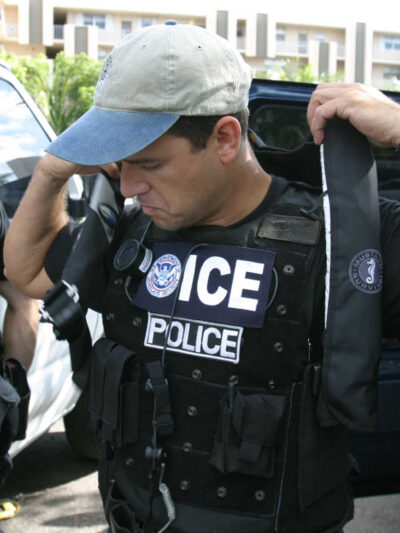
ICE Unleashed
Over the past sixteen months, many Americans have grown used to the Trump administration’s racist and xenophobic immigration policies. After all, Trump’s presidential campaign was built on the promise of an unnecessary southern border wall. In Montana, we may feel insulated from those anti-immigrant policies. Nothing could be further from the truth.
By Alex Rate
What Color is a Montanan?
I was traveling along HWY 12 to Helena from Missoula. My coworker was driving our rental vehicle, and we were headed there for meetings. About five miles outside of Avon, a Montana Highway Patrol car driving in the opposite direction made a swift U-turn in the middle of the highway after passing us. The patrol car’s lights flashed. We knew we were about to be stopped.
By Zuri Moreno

Comunicado sobre el uso de perfil racial por parte de Patrulla Fronteriza a ciudadanas estadounidenses en la frontera de Montana
El pasado miércoles, dos residentes Estadounidenses de Montana fueron detenidas e interrogadas por agentes de la Patrulla Fronteriza después de que él las escucho hablando en español en una gasolinera en Harve. El agente dijo: “La razón por la que te pedí tu identificación es por entré aquí y vi que ustedes estaban hablando español, lo cual es muy raro por aquí.”
Statement on Border Patrol Racial Profiling of U.S. Citizens on Montana Border
On Wednesday, two Montana residents and U.S. citizens were detained and interrogated by a Border Patrol agent after he heard them speaking Spanish in a Havre gas station. The agent stated: "The reason I asked you for your ID is because I came in here, and I saw that you guys are speaking Spanish, which is very unheard of up here."
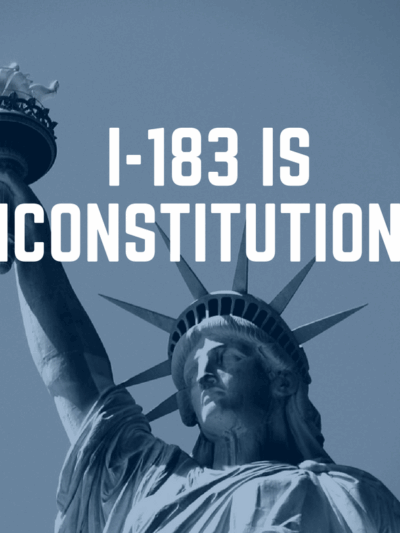
Reasons Why I-183 is Unconstitutional
We have eight reasons why I-183 would be unconstitutional.
I-183 would require government officials at the state and local level to prevent Montanans from using bathrooms and other public facilities based on a medically inaccurate and subjective assessment of a person’s gender. This violates Montanans’ fundamental rights to privacy and dignity.The measure prevents transgender and non-binary Montanans from having equal access to public facilities because of their gender identity.The initiative subjects all Montanans to scrutiny of their gender expression, and invades their privacy and individual dignity. Any Montanan could be stopped by government officials and private individuals if another person does not think they satisfy stereotypes of what it means to be ‘masculine’ or ‘feminine.’The initiative would force transgender and non-binary Montanans out of public life and prevent them from pursuing life’s basic necessities – in this case, using the bathroom in a public building.The measure forces the government to interfere with an individual’s right to make private decisions about which public facilities they should use.Because I-183 defines sex as “a person’s immutable biological sex as objectively determined by anatomy and genetics existing at the time of birth,” state and local governments would be forced to access private medical information to determine what facility an individual should use.The measure would gut nondiscrimination laws put in place by cities throughout Montana, including Butte, Bozeman, Missoula, Helena, and Whitefish.I-183 is vague and unenforceable. Montanans and local governments charged with enforcing I-183 have no guidance on how to comply with I-183’s requirements and as a result would be exposed to costly lawsuits. The “bounty” provision of I-183 empowers vigilantes to sue local governments when they believe an individual is not using the facility that corresponds with the sex assigned on an original birth certificate.



Stay Informed
Sign up to be the first to hear about how to take action.
By completing this form, I agree to receive occasional emails per the terms of the ACLU’s privacy statement.
By completing this form, I agree to receive occasional emails per the terms of the ACLU’s privacy statement.